Ballater

Ballater is known as a gateway to the Cairngorms National Park even though we used Grantown-on-Spey as our gateway. It has strong ties to the monarchy as Balmoral Castle is only a few miles away. We are here to eat, drink, rest and hike.

We arrived in Ballater on October 5. This is a charming village in Aberdeenshire, Scotland on the River Dee.
We stayed at Darroch Learg Hotel which is a 10 room boutique hotel owned by the Franks family for over 60 years.
The hotel is perched on a hilltop with views across the valley of the River Dee to the hills around Glen Muick. Unfortunately our window only looked into the woods.
Our lovely room.
There were so many inviting rooms to sit in and relax. We met the owners and one of their three daughters who works in the hotel with them and lives in a mini castle next door (see photo below). Her parents are hoping she will continue to keep the hotel going as the other two daughters live in London.
We had wonderful meals in this dining room.
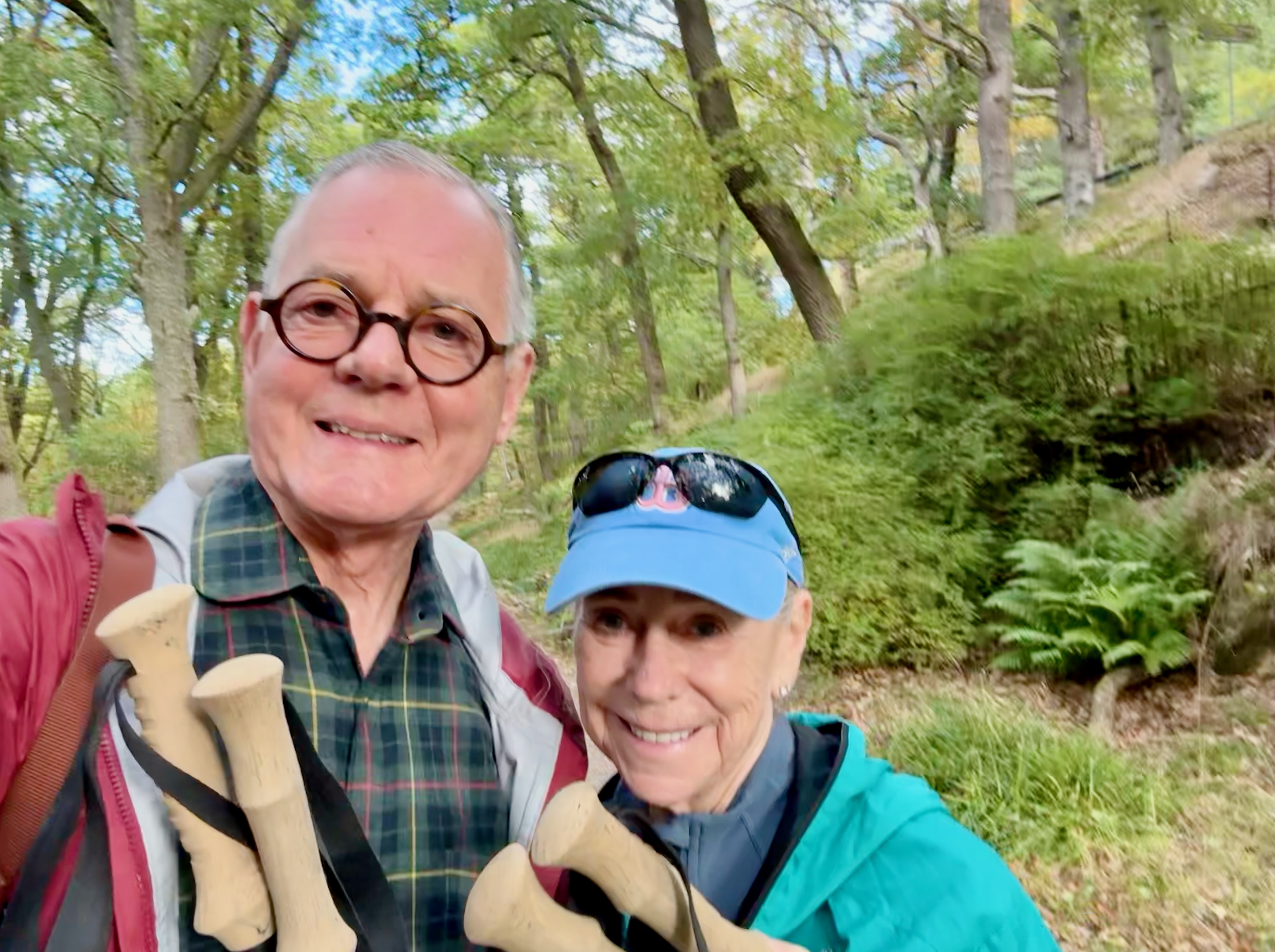
Jim found a scenic circular walking trail in the Cairngorms National Park that crosses seven bridges over the River Dee and its tributaries. We could access the walk from our hotel.
We really like the fall ferns, all brown.
Nice wide trail in the woods to start out.
Views of the river Dee.
Came across this guy just before the first bridge.
This was the first bridge.
Second bridge which we crossed the next day leaving Ballater.
The paths vary so much. Not so easy and wide here.
We were not the only ones walking on the trail.
Out of the woods with expansive views.
Third bridge.
Fourth bridge.
This bridge was donated to the public by the person mentioned on the sign.
The donor must have stinted on expenses as the bridge is not that sturdy.
Baa Baa black sheep….
This was a random find in the middle of the woods.
The fall foliage was the best we have seen so far. That is a field of rutabagas in the foreground.
This was by far Sandy’s favorite walk.
We decided to add to our walk and divert into the woods to see the ruins of Knock Castle. We had to go up a very long steep road to get to the castle but it was worth it.
To access the castle grounds we climbed over this stile.
The ruin is a 16th century castle built for the Gordon family but it has a tragic history.
It is said that Alexander Gordon sent his seven sons out to cut peat for the winter. They strayed onto the neighboring farm of the Forbes where a battle ensued resulting in all seven boys being killed and their heads severed and impaled on their peat spades. When their father was told this he collapsed and fell to his death down the turret staircase.
Here is a video e took standing inside the ruined castle. If you play it you can see the staircase the Laird fell to his death.
Our hosts told us you could see their hotel from the castle hilltop. Sure enough you can get a glimpse of its rooftops.
Fifth bridge.
We stopped for a rest and drink of water in this very old cemetery. I think Jim is sitting on a toppled gravestone. Jim was getting tired at this point.
This was a few days after the storm.
Sixth bridge.
Cute little stone cottage, typical abode in the remote villages.
Seventh and last bridge.
This Bridge is called the Royal Bridge as it was opened by Queen Victoria. Jim was completely exhausted at the end of this walk.
The village of Ballater is dominated by this grand striking spire of Glemuick Scottish church. On our last morning we saw a man unlock the door and we asked him if we could go inside. The church is normally closed except for services but this gentleman who was a church elder was happy to show us the church. We have found the Scottish people to be very friendly and accommodating to strangers.
Unlike castles Jim is always happy to go into churches.

We would highly recommend a visit to Ballater and a stay at The Darroch Learg Hotel.

One response to “Ballater”

  1. Such rustic beauty. It looked so peaceful. But, quite the story of the Gordons and Forbes.

Leave a Reply

Discover more from Living the retirement dream

Subscribe now to keep reading and get access to the full archive.

Continue reading